
Best Places to Live in Japan: Complete 2026 Guide for Foreigners
- How to Live in Japan: Understanding the Reality
- Best Places to Live in Japan for Foreigners in 2026
- How Much Does It Cost to Live in Japan?
- What's It Like to Live in Japan: Daily Realities
- Living in Japan as a Foreigner: Social Integration
- How to Live in Japan as a Foreigner: Practical Integration
- Healthcare and Education Systems
- How to Move and Live in Japan: Practical Checklist
- Best Places to Live in Japan for Americans and English Speakers (2026)
- What Do I Need to Live in Japan? Final Assessment
- Good Places to Live in Japan: Regional Alternatives
- Is Japan Right for You?
- Frequently asked questions: living in Japan as a foreigner
How to Live in Japan: Understanding the Reality
Before diving into specific locations, it's crucial to understand what living in Japan actually entails. Unlike a vacation, long-term residence requires navigating a sophisticated bureaucracy, adapting to intense work culture, and accepting your role as a perpetual outsider—even after years of residence.
The dual nature of Japanese society presents both incredible advantages and unique challenges:
- World-class safety: Ranking 6th globally in safety, Japan offers one of the lowest violent crime rates on the planet
- Exceptional healthcare: 3rd place worldwide for healthcare quality with universal coverage
- Outstanding longevity: The 3rd highest life expectancy globally at 84 years
- Top-tier education: #1 in the world for science and mathematics performance
However, these benefits coexist with bureaucratic inefficiencies that many expatriates describe as "Stone Age" and a work culture that coined the term karoshi (death from overwork).
Can Americans Live in Japan? (And Other Foreigners)
Yes, Americans and citizens from most countries can live in Japan, but you'll need proper documentation. For those considering moving to Japan, several visa options exist:
Work Visa Options:
- Japan Work Visa: For professionals in teaching, medicine, journalism, research, and other specialized fields
- Highly Skilled Professional Visa: Point-based system offering up to 5-year stays based on education, experience, and salary
- Working Holiday Visa: Available to citizens of specific countries, allows 1-year stays
- Digital Nomad Visa (launched April 2024): Permits remote workers earning at least $68,300 annually to reside for 6 months with international health insurance
Critical consideration: The language barrier is substantial. Approximately 95% of the job market requires advanced Japanese proficiency. If you're planning to work in Japan without speaking Japanese, your opportunities will concentrate in IT, marketing, or English teaching sectors.
Best Places to Live in Japan for Foreigners in 2026
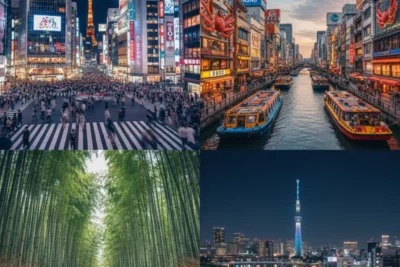
Choosing where to establish your base is perhaps the most important decision you'll make. Different cities offer vastly different experiences, costs, and opportunities.
Best Cities to Live in Japan for Foreigners (2026): Top Recommendations
1. Tokyo: The International Hub
Best for: Career opportunities, international community, modern amenities
Tokyo remains the premier destination for expatriates, particularly the Minato and Shibuya districts. These areas offer:
- Extensive public transportation connectivity
- Large international communities
- Abundant English-friendly services
- Maximum job opportunities across all sectors
Average rent (3-bedroom apartment): $2,713/month
However, Tokyo's premium comes at a cost. Those seeking better value should consider alternatives.
2. Osaka: Urban Life with Affordability
Best for: Cost-conscious professionals, foodies, accessible culture
Osaka offers the urban experience without Tokyo's price tag. Known for its friendly locals and incredible food scene, it's often called Japan's kitchen.
Average rent (3-bedroom apartment): $1,022/month
3. Kyoto: Cultural Immersion
Best for: Those prioritizing culture, traditional lifestyle, students
The ancient capital provides unparalleled access to traditional Japanese culture while maintaining modern infrastructure.
Average rent (3-bedroom apartment): $1,048/month
4. Fukuoka: The Rising Star
Best for: Quality of life seekers, those wanting lower costs, startup scene
Fukuoka combines affordability with modern amenities and a growing international tech scene.
Average rent (3-bedroom apartment): $693/month
Best Place to Live in Japan for English Speakers
If Japanese language proficiency is limited, consider these factors:
Tokyo (Minato, Shibuya, Roppongi) offers:
- Maximum English-friendly medical facilities
- International schools
- English-speaking service providers
- Large expatriate networks
Yokohama provides:
- Proximity to Tokyo's opportunities
- Lower costs ($1,365/month average rent)
- Significant international community
- Port city atmosphere
Cheapest Cities to Live in Japan for Foreigners (2026)
For budget-conscious expatriates, these cities offer the best value:
1. Fukuoka ($693/month) - Modern city with excellent food scene 2. Sapporo ($690/month) - Northern charm with distinct seasons 3. Hiroshima ($770/month) - Historical significance, coastal location 4. Sendai ($770/month) - Gateway to northern Japan, balanced lifestyle
Important note: While rent is cheaper outside major metropolitan areas, job opportunities for foreigners decrease significantly. Most positions requiring only English are concentrated in Tokyo, Osaka, and Nagoya.
How Much Does It Cost to Live in Japan?
Understanding the full financial picture is essential for planning your move.
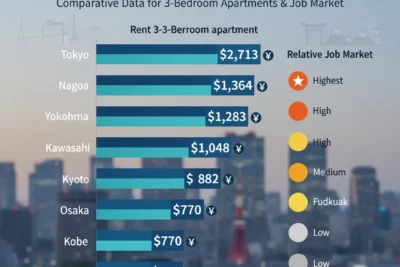
Cost Breakdown by City
| City | 3-Bed Apartment | Relative Job Market |
|---|---|---|
| Tokyo | $2,713 | Highest |
| Nagoya | $1,764 | High |
| Yokohama | $1,365 | High |
| Kawasaki | $1,283 | Medium |
| Kyoto | $1,048 | Medium |
| Osaka | $1,022 | High |
| Kobe | $882 | Medium |
| Sendai | $770 | Low |
| Hiroshima | $770 | Low |
| Fukuoka | $693 | Medium |
| Sapporo | $690 | Low |
Is It Cheaper to Live in Japan Than the US?
Salary comparison reveals a nuanced picture:
- Japan average: $29,589 annually
- United States average: $63,795 annually
- Germany average: $49,588 annually
- UK average: $35,172 annually
However, many expatriates report that entry-level positions in teaching and specialized fields offer better compensation in Japan relative to cost of living than similar roles elsewhere. The healthcare system's affordability (covering 70% of costs) also provides significant savings compared to US healthcare expenses.
How Much Does It Cost to Live in Tokyo, Japan?
Tokyo represents the premium option. Beyond the $2,713 average rent, budget for:
- Health insurance copay: 30% of medical costs
- International school tuition (if applicable): ¥610,000-¥6,000,000 ($4,372-$43,003) annually
- Food: Reasonable with access to fresh, high-quality ingredients
- Transportation: Excellent but adds up; monthly passes vary by distance
Minimum recommended savings before moving: Enough to cover 3-6 months of expenses plus rental deposits (typically 4-6 months' rent upfront).
What's It Like to Live in Japan: Daily Realities
The day-to-day experience combines exceptional conveniences with frustrating inconveniences.
The Positives
Safety and cleanliness: You can walk anywhere at night, leave belongings unattended, and enjoy impeccably maintained public spaces.
Food quality: Fresh, high-quality ingredients with reasonable portions and a cultural awareness against waste (mottainai concept).
Walkable cities: Especially Tokyo, where most destinations are accessible via walking and public transit.
Health-focused lifestyle: Cultural integration of exercise, nature appreciation, and clean eating.
The Challenges
Bureaucratic inefficiency: Document processing described as "Stone Age" by many expatriates, with long lines and rigid systems.
Narrow infrastructure: Streets and sidewalks often conflict between pedestrians and cyclists.
Indirect communication: Can hinder productivity and problem-solving, particularly in professional contexts.
Surface-level interactions: The cultural emphasis on humility (tatemae) can feel insincere to Westerners accustomed to directness.
Perhaps the most underestimated challenge is the psychological aspect of permanent foreigner status.
The Perpetual Outsider Phenomenon
Even after achieving fluency and living in Japan for decades, many expatriates report never feeling truly "local." This creates:
- Limited deep connections with Japanese individuals
- Expatriate-heavy social circles that tend to be transitory
- Feelings of isolation despite living in densely populated cities
- The Permanence Paradox: Reluctance to invest in quality-of-life improvements (furniture, appliances, vehicles) due to subconscious belief in the temporary nature of the stay
Considerations for Minorities
LGBTQ+ individuals, particularly transgender expatriates, face additional challenges due to rigid social norms and limited legal protections. The experience varies significantly by location, with Tokyo offering more openness than rural areas.
How Many Foreigners Live in Japan in 2025?
Current statistics show a growing but still small expatriate population, maintaining Japan's homogeneous character. This means:
- Limited precedent for integration paths
- Smaller support networks outside major cities
- Continued novelty factor that prevents blending in
How to Live in Japan as a Foreigner: Practical Integration
Success requires preparation beyond logistics.
Essential Cultural Competencies
Master these etiquette fundamentals:
- Remove shoes when entering homes (genkan entry area)
- Bow appropriately (ojigi) as greeting and respect
- Accept business cards with both hands, read carefully
- Avoid eating while walking or phone conversations on public transit
- Show profound respect to elders and authority figures
Work Culture Adaptation
Japanese professional environments embody concepts like shushin-koyo (lifetime employment loyalty) manifesting as:
- Extended hours: Leaving before your boss is considered disrespectful
- Hierarchical strictness: Clear power dynamics and seniority systems
- Intense dedication: The term karoshi (death from overwork) exists for reason
Recommendation: Those considering studying abroad in Japan should use this period to evaluate whether the work culture aligns with their values before committing to long-term residence.
Language Learning Priority
While English works in international districts, learning Japanese dramatically improves:
- Job market access (from 5% to 100% of opportunities)
- Healthcare communication and quality
- Social integration depth
- Daily convenience and independence
Start before moving: Basic Japanese proficiency makes initial settlement significantly smoother.
Healthcare and Education Systems
Navigating Japanese Healthcare
The universal healthcare system (kokumin kenko hoken) provides world-class care but with notable challenges:
Benefits:
- 70% coverage of medical costs
- Access after 3 months of residence
- 3rd best healthcare quality globally
- High life expectancy outcomes
Challenges:
- Language barriers: Many doctors and nurses lack English proficiency
- "Trial and error" clinic culture: No assigned GP system; you choose specialists directly
- Brief consultations: Clinics often operate as businesses with minimal appointment times
- Access restrictions: Top university hospitals typically require referrals
Solution: Consider supplemental international health insurance to cover the 30% copay and access English-speaking medical networks.
Education Options for Expatriate Families
Public schools:
- Free enrollment through local district office (kuyakusho)
- Full Japanese immersion
- World-leading academic standards (#1 in science/math)
- Intensive juku (cram school) culture
International schools:
- British, American, IB curricula available
- Expensive: ¥610,000-¥6,000,000 ($4,372-$43,003) annually
- Preferred by most expatriate families
- Limited integration with Japanese culture
How to Move and Live in Japan: Practical Checklist
Pre-Departure Essentials
Secure these before leaving:
- ✓ Job offer (typically required for work visa)
- ✓ Appropriate visa application initiated
- ✓ Basic Japanese language skills
- ✓ Significant savings (6+ months expenses plus deposits)
- ✓ International health insurance research
Upon Arrival Actions
Complete immediately:
- ✓ Open Japanese bank account (essential for salary)
- ✓ Register at local kuyakusho for health insurance and residence card
- ✓ Arrange mobile phone and internet services
- ✓ Set up supplemental insurance if needed
Property and Residence
Important facts:
- Foreigners can purchase property with same rights as Japanese citizens
- Property ownership does NOT accelerate permanent residence or citizenship paths
- Rental deposits typically equal 4-6 months' rent upfront
- Traditional Japanese homes feature unique elements: shoji (paper sliding doors), tatami (rice straw floors), fusuma (wooden panels), kotatsu (heated tables), futon (floor mattresses)
Best Places to Live in Japan for Americans and English Speakers (2026)
Specific recommendations for American expatriates:
Top choice: Tokyo (Minato Ward)
- Largest American expatriate community
- American Embassy proximity
- English-friendly medical facilities
- American schools available
- Familiar retail and dining options
Best value: Osaka
- Growing international community
- Lower costs with urban amenities
- Less rigid social atmosphere
- Better work-life balance than Tokyo
For families: Yokohama
- International schools
- Proximity to Tokyo opportunities
- More spacious housing than central Tokyo
- Strong expatriate support networks
What Do I Need to Live in Japan? Final Assessment
Success in Japan requires more than documentation—it demands psychological readiness.
Essential qualities:
- Adaptability: Embracing ambiguity and different approaches
- Patience: Navigating bureaucracy and cultural misunderstandings
- Resilience: Handling perpetual outsider status
- Language commitment: Willingness to achieve functional Japanese proficiency
- Cultural humility: Genuine interest in Japanese perspectives and customs
Honest self-evaluation questions:
- Can you thrive while feeling perpetually different?
- Are you prepared for a demanding work culture?
- Will you invest time in serious language study?
- Can you handle indirect communication and bureaucracy?
- Do your professional skills transfer to the available job market?
Good Places to Live in Japan: Regional Alternatives
Beyond major cities, consider these alternatives:
Nara: Historical significance, proximity to Osaka/Kyoto, smaller community feel
Kanazawa: Traditional culture preservation, excellent food, lower costs, growing expat presence
Nagoya: Industrial hub, central location, lower profile than Tokyo/Osaka, good value
Is Japan Right for You?
Japan offers extraordinary quality of life, safety, and cultural richness alongside significant adaptation challenges. The question isn't whether Japan is a good country—objectively, it ranks among the world's best. The question is whether you possess the resilience to thrive in a society where comfort and security coexist with profound otherness.
For those considering moving to Japan: Begin with thorough research, realistic expectations, and ideally a preliminary visit or study abroad program to test compatibility. Those who succeed typically share common traits: cultural curiosity, patience with ambiguity, commitment to language learning, and clear professional goals that align with Japan's job market realities.
The best place to live in Japan ultimately depends on your priorities: career advancement (Tokyo), cultural immersion (Kyoto), value for money (Fukuoka), or balanced lifestyle (Osaka). Whatever you choose, approach the decision with both enthusiasm for Japan's remarkable qualities and realistic awareness of its inevitable challenges. Your success depends not just on choosing the right city, but on your readiness to embrace the complete Japanese experience—contradictions and all.
Alex Martínez tests Japanese apps so you don’t have to. He blends quick speaking drills with smart SRS to help busy learners get results in 20 minutes a day. When not writing guides, he’s shadowing anime lines and sipping matcha.
Links: X/Twitter | YouTube/Medium | Contact
Frequently asked questions: living in Japan as a foreigner
Is Japan a good place to live for foreigners
Yes, with realistic expectations. Japan offers world-class safety, excellent public transport, universal healthcare, and extremely low violent crime. The main challenges are language barriers, bureaucracy, and a demanding work culture. Most foreigners who prepare properly and are willing to integrate find it a rewarding long-term choice.
What are the best cities to live in Japan for foreigners in 2026
Tokyo for job opportunities and English infrastructure. Osaka for lower cost of living and a large expat community. Fukuoka for quality-of-life balance and affordability. Kyoto for cultural depth and a slower pace. Nagoya for manufacturing and engineering careers. Each city has a different expat profile — match the city to your reason for moving.
What is the cheapest city to live in Japan for foreigners
Fukuoka and Sapporo consistently rank as the most affordable major cities for foreigners. Monthly living costs in Fukuoka run approximately 30-40 percent lower than Tokyo for comparable quality. Sendai and Hiroshima are also affordable with growing expat communities and good infrastructure.
Can Americans live in Japan permanently
Yes. The main paths are: a work visa requiring employer sponsorship, a student visa that can transition to a work visa, a spouse or family visa, or permanent residence after 10 years of continuous legal residence. Americans cannot simply move without a qualifying visa category.
Is Japan a safe place to live
Japan ranks among the safest countries in the world for violent crime. The primary safety concerns for residents are natural disasters — earthquakes and typhoons. All residents should keep an emergency preparedness kit and know their local evacuation routes.
What is the cost of living in Japan for foreigners per month
Tokyo: 150,000 to 250,000 yen per month for a studio, utilities, food, and transport. Osaka: 120,000 to 200,000 yen. Fukuoka: 100,000 to 160,000 yen. Share houses reduce accommodation costs by 40 to 60 percent in any city. Budget at least 120,000 yen per month anywhere in Japan for a comfortable solo lifestyle.
Is it hard to find work in Japan as a foreigner
It depends on your field and Japanese level. English-speaking jobs in tech, finance, education (ALT), and international business are accessible without Japanese. Most other sectors require at minimum N2 Japanese proficiency. The demand for skilled foreign workers in Japan has increased significantly since 2023 as the government relaxed visa categories.